
HOW DENIM IS MADE
The first phase in the creation of a pair of jeans is making the denim.This is where the foundation for the garment is laid and each stage of the production hugely impacts how the final garment will look and thereby how consumers will feel about it.Before denim became a fashion item,functionality and durability were the most important purchase criteria.To a large extent,this came down to the fabric itself.How it performed was more important than how it looked.When denim was commercialized and became an essential part of everyday fashion for people all around the world,looks became more important than durability.The renaissance of artisan denim has made consumers question denim production methods again.While durability and performance are important for these influential denim connoisseurs,many probably still prioritize the aesthetics of their denim higher than the durability of it
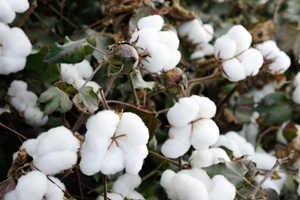
COTTON:THE BEGINNING OF ALL JEANS
Cotton is the foundation of denim. This natural fiber is one of the pillars of the entire apparel industry. But cotton is never just cotton. Differences in local variants of this global commodity hugely influence how our jeans look. feel. and fade-characteristics that are particularly important in heritage fashion.
Cotton is one of the world’s most important crops, ln terms of usability, economic value, and environmental impact. It is comfortable, breathable, durable, and looks great when woven. It is also the Starting point for each of the over one billion pairs of jeans sold worldwide every year. This ancient crop has been cultivated for thousands of years. Alongthe way ithas helped build nations and caused tremendous sufering. During the Industrial Revolution which was largely fuelled by the textile industry, cotton played a crucial role. It was also indirectly a key reason for the outbreak of the American Civil War, as cotton farming depended on slave workers. Today, cotton continues to ln- fluence economies around the world, When cotton prices go down, millions of farmers and companies suffer economically Still, cotton Is not something most consumers think about.
Cotton is a natural fiber that comes from the cotton plant. The plant’s fruit, known as the cotton boll, yields a fluffy white lint. That fluffy ballis what eventually becomes the pair of jeans you are wearing now, While originally a wild crop, cotton has evolved through breeding and genetic assistance to become more processing-friendly and to provide a better yield. The cotton boll is the size ofa frg and contains an average of around 500,000 fibers. Each plantt may bear up to 100 bolls. A cotton plant produces 300-350 grams per season, which means it takes an average ol two plants to produce enough cotton for a pair of five-Pocket jeans. The amount of cotton actually needed depends on the size of the garment and on whether the denim is rigid, stretch, mercerized, or a combination of these variables Depending on the type, it takes an average of 140 days from when the seed is planted until the dried-up locks of cotton are ready for picking. After harvesting, the cotton goes through the ginning process at the cultivation site. This separates the cotton fibers from the seeds. After ginning, the raw fiber is compressed into bales. The weight of one bale is approximately 250 kilograms, which is enough cotton to make around 350 pairs of denim jeans.
THE DIFFERENCES BETWEEN COTTON TYPES
There are a number of different types of cotton with different physical properties that influence what the denim willlook like. It can be hard for the untrained eye to distinguish one Kind of cotton from another in a pair of jeans, especially when denim is in its raw state, Once you start wearing it though, the qualities and characteristics start to show
One of the most important physical properties of cotton is staple length which refers to the length of the fiber “The longer cotton fibers are, the better Suited they are to produce high-quality yarns, says Simon giuliani Of Candiani Denim For Jeans production, Upland cotton is most commonly used. while this type belongs to the family of Short staple cottons extra long Staple (ELS) cottons such as Egyptian Giza Inclian Suvin. and Chinese Xinjiang gives the longest fibers Denim expert Paul Mailman argues that, “since denim uses what would be considered a coarse yarn count premium long Staple cotton is realIy not necessary Generally a stape length of one inch is sufficient ” Though not always the case, Short Staple cottons are generally cheaper and of lower quality, which means they are commonly used in mass production
Another important property is the fineness and maturity of the fiber, with is determined by measuring the air permeability of compressed cotton (micronaire).using cotton with alow micronaire count leads to neppy yarn adn more waste,as it breaks more easily
Additionally,the strength of the fiber is important,as it tells you the maximum load the fibers will hold before they break,which influences the strength of the yarn,this is measured as tensile strength
And finally the actual color ot the fiber is used to distinguish one batch of cotton from another which is especially important if the cotton will not be dyed before being woven Into fabric.